Last updated 24 September 2026.
For selling specific cars, Google Vehicle Ads usually give a dealer the better return: buyers see the car, the price and the mileage before they click, so the clicks you pay for are better qualified. Traditional PPC (text search ads) wins when you need control over the wording and the landing page, for things like finance offers, your brand name or service work. Most dealers get the best results running both.
This guide compares the two formats point by point and explains how to use them together.
What are Google Vehicle Ads?
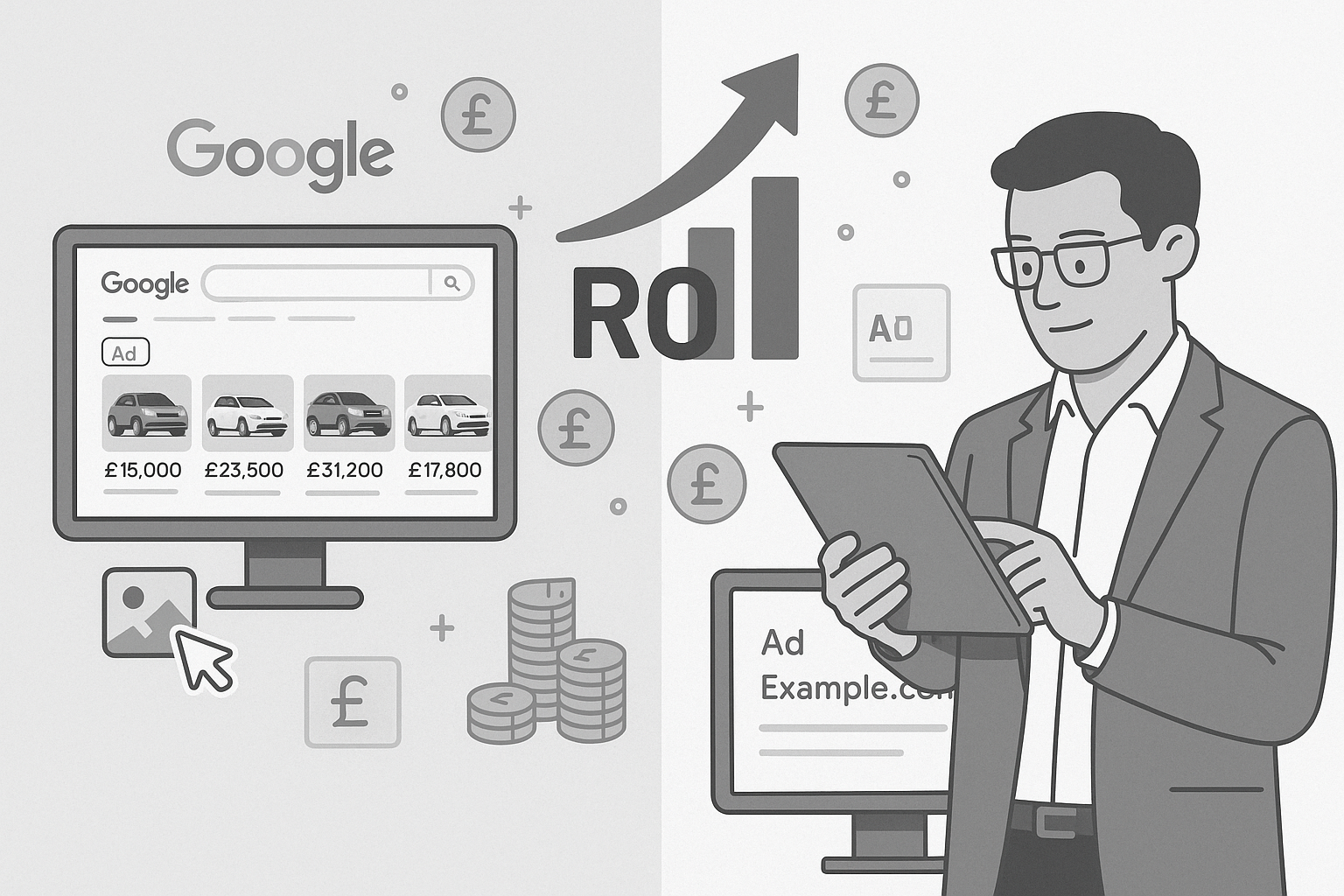
Google Vehicle Ads are ads built from your stock, where each ad is one of your cars. When someone searches for something like “used BMW 3 Series near me” or “Ford Fiesta for sale”, your matching cars can appear with a photo, price, mileage and your dealership name.
They run from a feed of your stock from your dealer management system, not from keywords you pick. Google matches your cars to relevant searches itself. For how they work and the results one dealer got, see our guide to the benefits of Google Vehicle Ads.
What is traditional PPC?
Traditional PPC means text ads on Google Search that appear when someone types the keywords you have bid on. A dealer might bid on “used cars for sale in Leeds”, “car dealer near me” or “used car finance”. Your text ad appears among other advertisers’ ads, and you pay each time someone clicks.
PPC needs keyword research, ad copy, bid management and regular optimisation. You control the message precisely, but the ad has only words to earn the click.
How do they compare?
Vehicle Ads come out ahead on lead quality, cost and scaling with your stock. PPC comes out ahead on control and on promoting anything that is not a specific car.
Ad format
Vehicle Ads
Show a photo of the car with its make, model, price, mileage and your name. The buyer sees the actual car before clicking.
Traditional PPC
Text only: a headline, a description and a web address. No photo, no price and nothing about a particular car unless you write it in.
Better: Vehicle Ads. The photo and price do the qualifying for you. Anyone who clicks has already seen what you are selling and what it costs.
Quality of the visits
Vehicle Ads bring buyers who already know what to expect. They have seen the car, the price and the key details, so when they land on your dealer website they tend to look at more of the vehicle page, stay longer, enquire more often and leave straight away less often.
A PPC click comes from someone who has only read a line of text. They may expect something different from what they find, so more of them leave without doing anything.
Better: Vehicle Ads for searches about a particular car. PPC can still bring good visits for broader searches.
Cost per click
Vehicle Ads usually cost less per click than search ads on car-buying keywords. Terms like “used cars for sale” and “car dealer near me” are competitive, so the price of a click depends heavily on your area and who else is bidding.
Vehicle Ads are matched to your stock rather than bought keyword by keyword, and the photo tends to earn more clicks per impression, which helps keep the cost of each click down.
Better: Vehicle Ads in most cases, though PPC costs vary a lot by keyword and area. Our Google Vehicle Ads calculator lets you compare the two with your own figures.
Cost per lead
Cost per lead is the figure that matters most. It combines what you pay for each click with how many of those visitors go on to enquire.
In our dealer case study, Vehicle Ads brought 350 conversions from 23.9k visitors over three months. Because Vehicle Ads visitors have already seen the car and price, more of them tend to convert than visitors from general PPC, which brings the cost per lead down.
PPC can compete on cost per lead for narrow, specific keywords. For broad car-buying searches, it usually costs more per lead than Vehicle Ads.
Better: Vehicle Ads for people looking to buy a particular car. PPC can win for niche searches about services.
Control
PPC gives you far more control. You decide:
- which keywords you target and which you exclude
- what the ad says, including offers and calls to action
- which page people land on, not just vehicle pages
- which extras appear, such as your phone number, location and links to other pages
- which audiences you target, including people who have visited your site before
Vehicle Ads give you less control. Google decides which searches show your cars, based on your feed. You can steer that with campaign settings, excluded searches and bids, but you cannot write the ad or choose the landing page. The ad always shows the car from your feed and links to that car’s page.
Better: PPC for flexibility and control over the message.
Scaling with your stock
Vehicle Ads grow with your stock. The more cars in your feed, the more chances to appear. Adding a car to your DMS creates a new ad without any extra campaign work.
PPC has to be grown by hand: new keywords, new ad groups, new copy and more bid management. That takes time and know-how.
Better: Vehicle Ads, because they scale with your stock without extra work.
Promoting your brand and offers
PPC lets you write your own message, push offers, say what makes you different and send people to a particular page. That makes it the better tool for:
- building awareness of your dealership name
- promoting a particular offer or event
- sending people to your finance, service or about pages
- bidding on competitors’ names, within Google’s rules
Vehicle Ads build awareness through the number of times your cars are seen. The case study dealer had 1.66 million impressions in three months. But the ad can only say what is in your feed.
Better: PPC for brand and promotional messages.
When should you use each?
Use Vehicle Ads to sell the cars you have in stock, and PPC for everything else you want to promote.
Use Vehicle Ads when you want to:
- reach people searching for the kind of cars you sell
- advertise from a well-kept stock feed with good photos and accurate data
- lower your cost per lead
- get more enquiries, calls and test drive bookings
- have your advertising grow with your stock without extra work
Use traditional PPC when you want to:
- appear for broader searches like “car dealer near me”
- promote a particular offer, finance deal or event
- send people to pages other than vehicle pages
- control exactly what the ad says and where it goes
- appear for competitors’ names or for service searches
Should you run both?
Yes, for most dealers. A combined plan looks like this:
- Vehicle Ads as the main source of visits and leads for specific cars.
- Traditional PPC for your brand name, broader searches, offers and service keywords that Vehicle Ads cannot cover.
- Remarketing through Display and Performance Max to reach people who looked at your cars but did not get in touch.
That way you are visible from the buyer’s first search through to the car they finally pick. Paid ads also sit on top of your free search traffic, which our SEO guide for car dealers covers.
What do you need to get started?
Vehicle Ads need a stock feed and vehicle pages that match it. PPC needs keyword research, ad copy and landing pages.
For Vehicle Ads
- a dealer management system that produces a vehicle feed meeting Google’s requirements
- a dealer website with a page for every car
- a Google Merchant Center account with a verified domain
- a Google Ads account linked to Merchant Center
- conversion tracking on your website
Our Google Vehicle Ads setup guide goes through each step.
For traditional PPC
- a Google Ads account
- keyword research for your area and the cars you sell
- well-written ad copy for each ad group
- a landing page suited to each campaign
- conversion tracking on your website
How Haswent can help
We manage both Google Vehicle Ads and traditional PPC campaigns for dealers across the UK. Because we also build your dealer website and provide the DMS your stock lives in, we can see the whole route, from a car being added to the ad being shown and the enquiry being tracked.
That means:
- your Vehicle Ads always match your current stock
- conversions are tracked from the ad click to the enquiry
- Vehicle Ads and PPC are planned together, so the two do not compete for the same searches and waste budget
- one team looks after your website, stock, feeds and ads
For how paid ads fit with your website, social media and reviews, see car dealer marketing.
Get in touch with our team to talk through the right mix of advertising for your dealership.