Last updated 24 September 2026.
Good car dealer website design gets a buyer from your stock list to an enquiry with as little effort as possible. That means searchable stock with honest prices and plenty of photos, several ways to get in touch, clear finance figures, reasons to trust you, and a site that works properly on a phone. This guide goes through each of those for UK used car dealers, then covers templated against bespoke design, what to measure and how to choose who builds it.
What should a car dealer website include?
A page for every car with detailed specs, MOT history and plenty of photos; search and filters; prices that include any admin fees; enquiry, test drive, finance and part exchange options on every vehicle page; your reviews, warranty and accreditations; and clear contact details and opening hours. All of it has to work on a phone.
For the technical side, such as speed, SEO and connecting the site to your stock, see what makes a great dealer website.
How used car buyers shop online, and what that means for your website
Most used car buyers do their research online before they visit a forecourt, so your website often decides whether they come to you at all. That research shapes what your car dealer website needs to do.
UK buyers compare makes, models, mileage, MOT history and prices across dealers. They read independent reviews, watch videos and look at finance options, mostly from home and a lot of it on their phones. When they land on your site, they’re looking for:
- a detailed stock list
- clear prices, including VAT and any admin fees
- good photos and videos
- full specs and MOT history
- your location, opening hours and contact details (and how to reach you by public transport)
- finance options, including PCP and HP
- a way to value their part exchange
Trust matters more with used cars, because buyers worry about what they can’t see. Reviews on AutoTrader and Google, the warranty you offer and accreditations such as Trading Standards approval all affect whether they pick you, so put them on your dealer website where buyers will see them.
The essential parts of a car dealer website
A good dealer website is easy to use and points visitors towards an enquiry at every step. These are the parts to get right, in order of how much they matter to a buyer.
Stock list and search
Your stock is the main reason anyone visits, so it needs to be easy to browse and honest.
- Photos. Take good photos of every car, inside and out, and show minor marks clearly.
- Descriptions. Give the features, mileage, service history and MOT status for each car, and be upfront about known faults.
- Search filters. Let buyers filter by make, model, year, price, mileage, engine size, fuel type, transmission, number of doors and more.
- Prices. Show prices clearly, including VAT and any admin fees, and be upfront about optional extras and what they cost.
Ways to get in touch
Buyers want to contact you in the way that suits them, so offer several options on every vehicle page rather than a single “Enquire” button. Typical calls to action are:
- Book a Test Drive
- Get a Finance Quote
- Value My Part-Exchange
- Call Us Now
- Enquire Online
- Chat with Us on WhatsApp
Back those up with:
- your phone number on every page, ideally in the header and footer, with click-to-call on mobile
- short contact forms that comply with GDPR, with separate forms for general, finance and service enquiries
- live chat, staffed during opening hours
- a WhatsApp button for quick questions
- an online finance application, with the finance options UK buyers expect
Our guide to increasing test drive bookings from your website covers how to lay these out.
Easy to use on any device
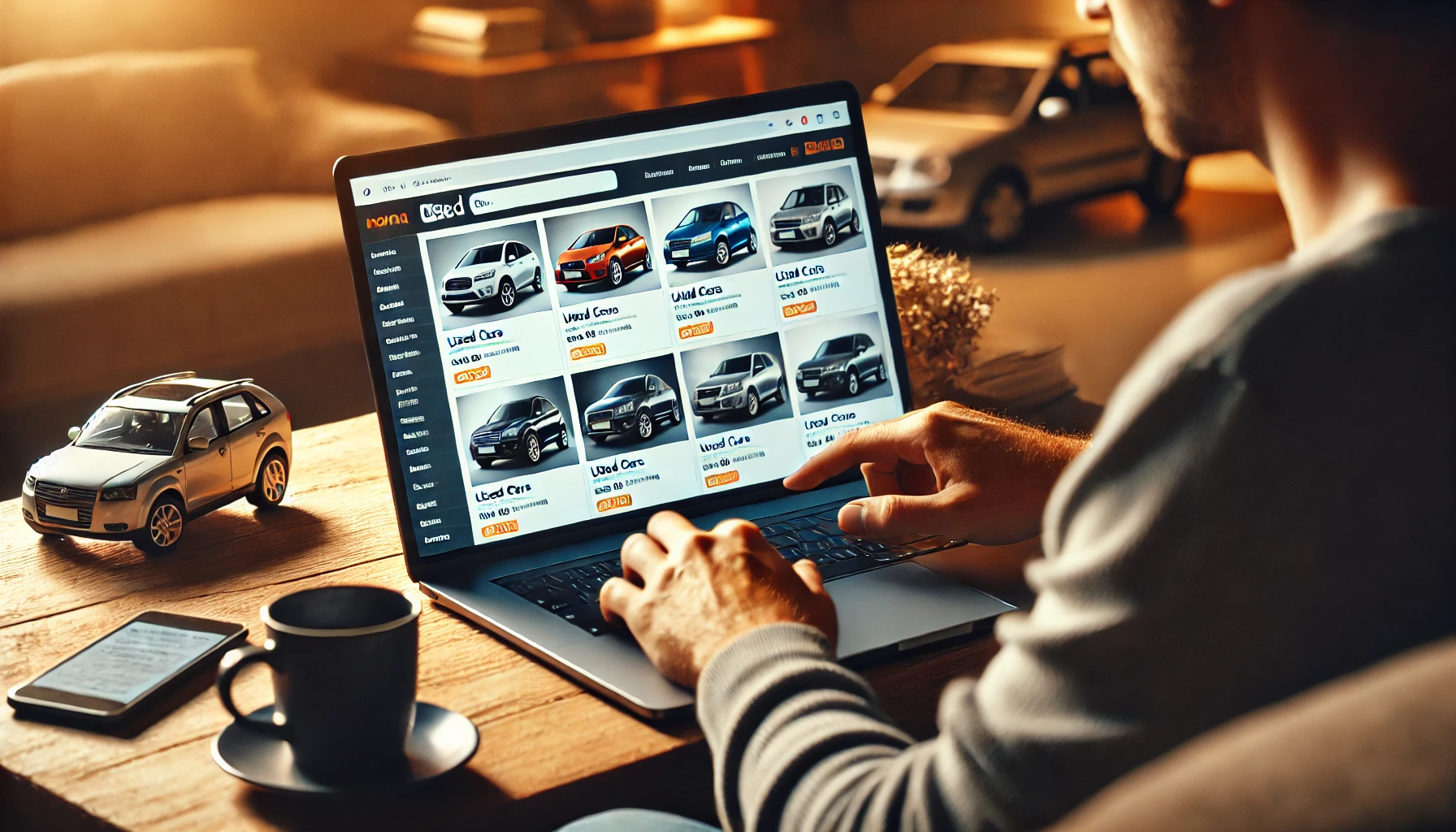
Visitors leave sites that are slow or confusing, so the basics of usability come before any design flourishes.
- Keep menus clear and the site structure simple, so people find what they want quickly.
- Compress images and keep code lean so pages load fast, even on a weak connection.
- Make sure the site works on desktop, tablet and phone. Most research now happens on a phone.
- Keep the design clean and in line with your dealership’s brand.
- Follow the accessibility guidelines (WCAG) so the site works for everyone, including disabled visitors, and meets UK accessibility rules.
Content and SEO
Content and SEO bring in buyers who are searching for cars like yours, without paying for every click.
- A blog. Write about buying tips, vehicle reviews, local news, servicing advice and UK rules such as ULEZ and Clean Air Zones.
- Local SEO. Put your dealership’s name, address and phone number on every page, claim and fill in your Google Business Profile, and target searches for your area. Our local SEO guide for car dealers goes through it step by step.
- Schema markup. Use schema markup to help search engines understand your pages and show rich results.
Your dealership and why buyers should trust you
People buy from dealers they trust, so tell them who you are and show what others say about you.
- An About Us page with your story and your experience in the UK used car trade.
- Staff profiles, so buyers know who they’ll be dealing with.
- Testimonials and reviews from UK customers, including reviews from AutoTrader.
- Awards and accreditations, such as Trading Standards approval and AutoTrader Highly Rated.
- Security badges, and a clear statement that you follow UK data protection law.
Finance
Finance is a big part of how UK used cars are bought, so make the options easy to understand on every car.
- Put a finance calculator on your vehicle pages so buyers can see monthly payments at different deposits, terms and APRs.
- Show which finance options (PCP, HP and so on) are available for each car.
- Let customers apply for finance online.
- Always show the representative APR.
- Make sure all finance wording follows Financial Conduct Authority (FCA) rules.
- Add a finance FAQ that answers questions such as “What is PCP?” and “What are the benefits of HP?“.
- Show which finance providers you work with.
Templated or bespoke design: which is right for you?
A templated website is cheaper and quicker to launch, while a bespoke website costs more and takes longer but gives you a design nobody else has. This is how they compare:
| Feature | Templated website | Bespoke website |
|---|---|---|
| Cost | Lower initial cost | Higher initial cost |
| Speed | Faster to launch | Longer development time |
| Customisation | Limited customisation options | Can be customised to your brand and needs |
| Uniqueness | Can look similar to other websites using the same template | Unique to your dealership |
| SEO | Can be SEO-friendly, but may need extra work | Built with SEO in mind from the start |
| Scalability | May be limited as you grow | Easier to extend as your business changes |
Design for every screen size
Whichever you choose, the site must be responsive, which means it adapts to any screen from a desktop monitor to a phone. That gives you:
- a consistent experience on every device
- a site that works for the growing number of mobile visitors
- better SEO, because Google favours mobile-friendly sites
- fewer visitors leaving straight away
- one website to maintain instead of separate desktop and mobile sites
Website design trends for used car dealers
The trends worth watching are the ones that help buyers find the right car faster.
- Personalisation. Change what visitors see based on what they’ve browsed and where in the UK they are.
- Video. Use video to show cars and their features, explain finance and give a tour of your forecourt.
- UK-specific filters. Let buyers filter by ULEZ compliance and road tax.
- AI chatbots. Answer common questions around the clock, including questions about UK rules and terms.
Measuring your website’s performance
Measure what your website brings in, so you know what’s working and what to change.
- Use analytics to track traffic, bounce rate, conversion rate and the other main numbers.
- Set up conversion tracking on your forms and calls to action.
- A/B test layouts and wording to see what works best.
- Work out your return by tracking the leads, sales and revenue that come from your website.
Choosing the right website partner
Pick a partner with experience of UK car dealer websites and ask them direct questions before you sign. Haswent is one option. Whoever you talk to, ask:
- What SEO do you do for UK dealers?
- What support do you offer, and during which hours?
- How do you make sure the site meets UK regulations?
- Have you built car dealer websites in the UK before?
- Can I see dealer websites you’ve built?
- Do you understand GDPR and UK data protection law?
- Have you added finance calculators and applications to used car websites before?
Putting it together
A dealer website that attracts buyers covers the basics above: searchable stock, honest prices, several ways to enquire, clear finance and a design that works on any device, all within UK rules. For more on what a website does for your business, read our post on the benefits of a car dealer website.
Pairing a car dealer website with our dealer management system (DMS) lets you run stock, invoicing and advertising from one system. Stock syncs between the DMS and your website, so your listings stay accurate, and invoicing and customer records sit in the same place, which leaves more time for selling.
Contact Haswent and we'll look at your current site with you and show you what we would improve.